Why ‘Severe Icing’ Is Under Scrutiny After Florida Learjet Crash
Updated 12:05 2 Nov 2026 GMTPublished 12:03 2 Nov 2026 GMT
Crew were heard talking about 'ice' and 'moderate turbulence' before the aircraft fatally crashed to the ground and killed nine people
An aviation expert and pilot has explained exactly what 'severe icing' is and how it could have caused the devastating Florida business flight crash that killed all nine people on board.
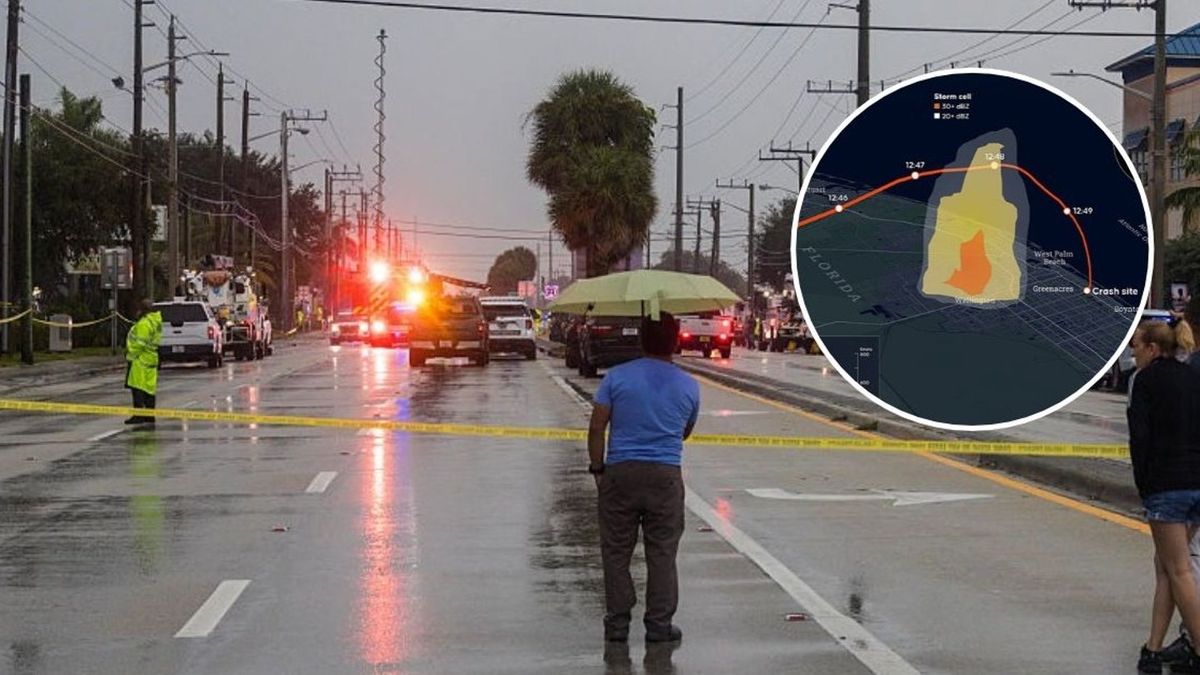
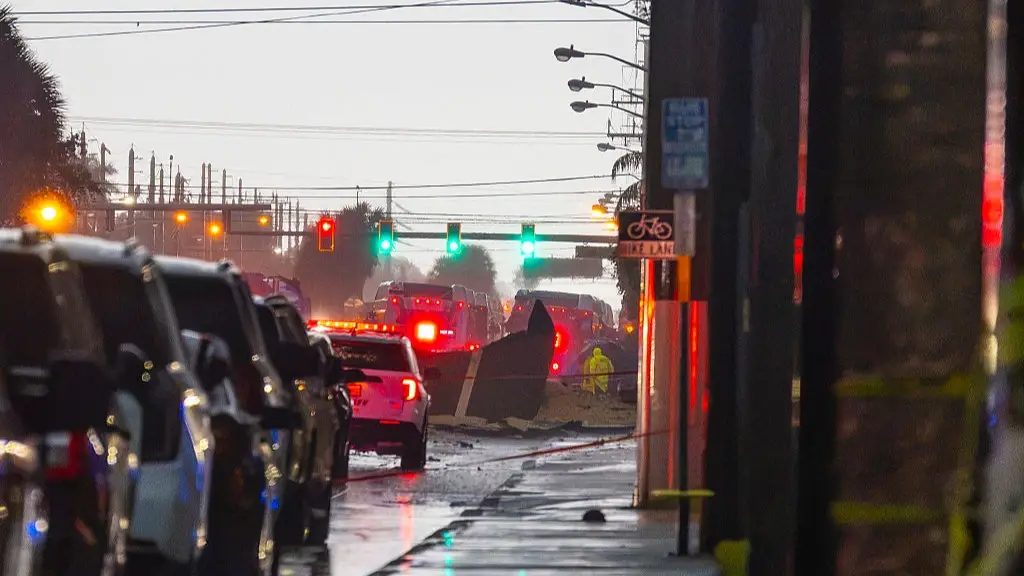
A business jet nosedived into a neighbourhood in Palm Beach County and erupted into a giant fireball that appeared to just miss homes before crashing near a busy road, leaving a huge crater in the ground.
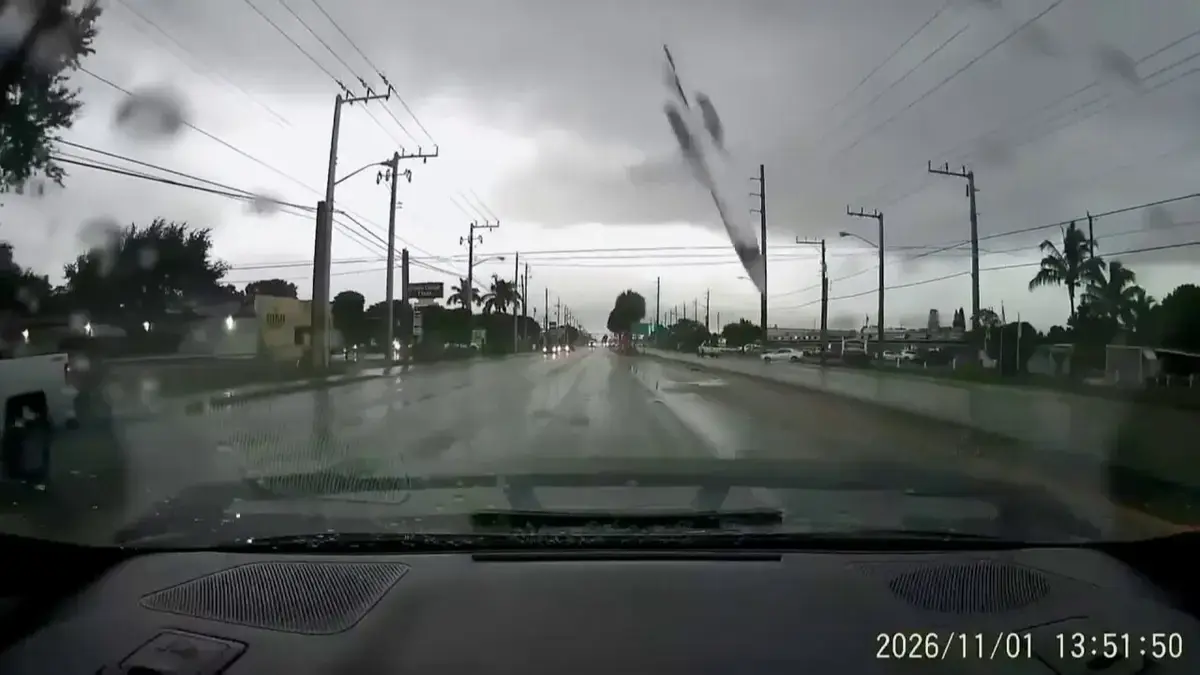
Videos recorded by people inside their cars captured the terrifying moment the aircraft plunged from the sky, before striking near the road and exploding.
Transportation secretary Sean Duffy posted on X on Sunday (1 November) that the Learjet 60 crashed at 12.50pm local time close to Donald Trump's Mar-a-Lago estate, calling it a 'horrific tragedy'.
Advert
The scene of the fatal plane crash (Saul Martinez/Getty Images)
The Federal Aviation Administration sent a team to the scene to support the National Transportation Safety Board’s investigation in Florida into the cause.
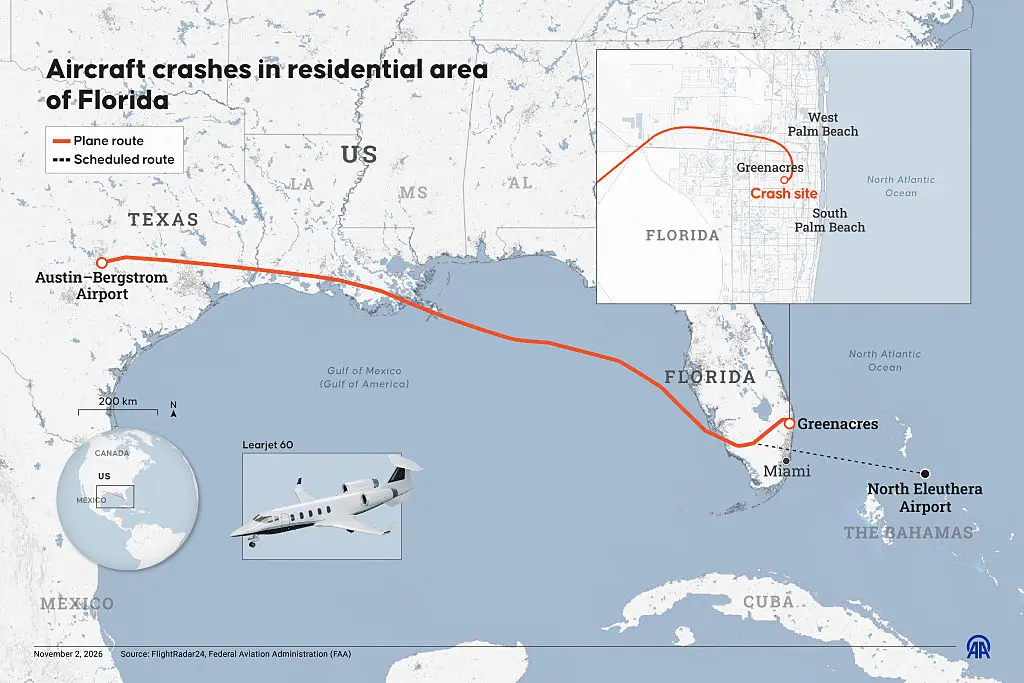
Currently, there are no reports of anyone on the ground being struck and killed, but all nine people on board the jet, travelling from Austin, Texas to the Bahamas, have died.
The exact cause of the crash is still under investigation, but devastating cockpit recordings have revealed the final moments on board.
In the clips, it is indicated that the crew warned of 'severe icing' and adverse weather and turbulence at 35,000 feet. It is being probed whether this was the reason, or whether another failure was to blame.
Speaking directly to LADbible, Justin Crabbe, commercial pilot CEO at Jettly, a global private aviation broker platform, has explained exactly what ice on the wings means and how it can impact the aircraft.
Justin Crabbe is CEO of Jettly (Jettly)
He has discussed what the mention of 'ice' means in the audio, explaining how it usually accumulates on the wings, tail or windshield and what the term 'severe icing' really means for an aircraft and how it can make a plane more difficult to control.
"When an aircraft flies through clouds containing supercooled water droplets, those droplets can freeze on contact with the aircraft," he explained.
"Even a relatively small amount of ice can significantly affect how an aircraft flies and how turbulence can also impact an aircraft.
"Severe icing means ice is accumulating at a rate that the aircraft's anti-icing or de-icing systems may not be able to adequately manage.
"Ice changes the shape of the wings, reduces lift, increases drag and can make the aircraft much more difficult to control.
The Learjet 60 plunged from the sky (X)
"In severe conditions, the aircraft can lose performance very quickly, particularly if the pilots are unable to exit the icing conditions.
Justin said the presence of ice could've 'worsened' the situation if the aircraft was already fighting through turbulence, explaining: "One possibility is that ice accumulation degraded the aircraft's aerodynamic performance to the point where it could no longer maintain sufficient lift.
"If the aircraft was also encountering significant turbulence, that could have made an already difficult situation worse.
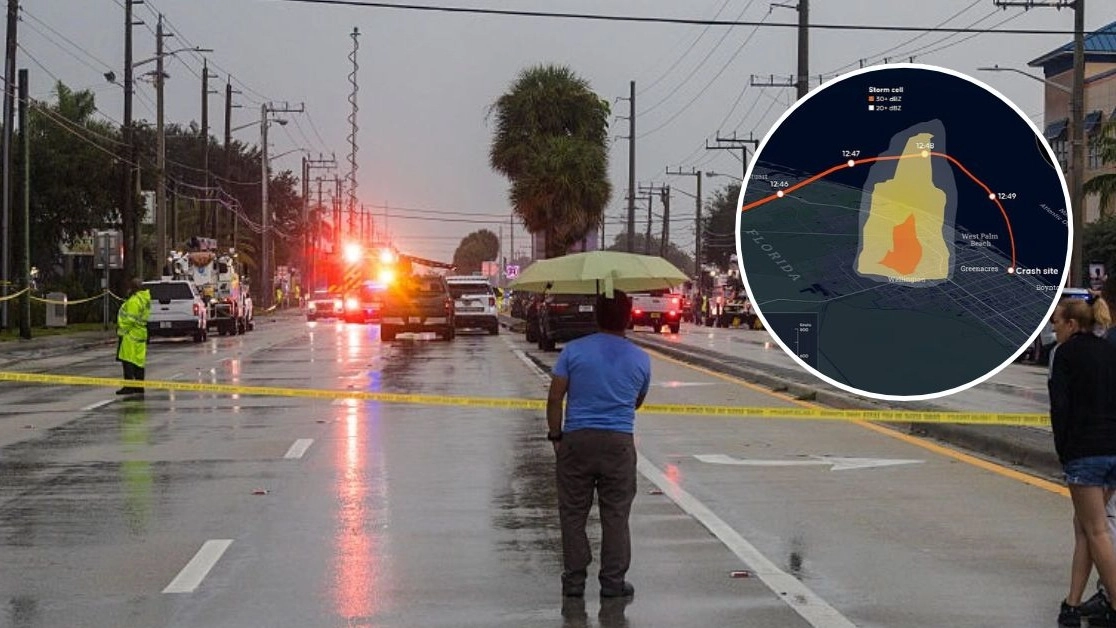
The flight map for the aircraft (Getty)
"Ice can increase an aircraft's stall speed, meaning it can stall at an airspeed that would normally be considered safe. If the aircraft entered an aerodynamic stall at an altitude where recovery wasn't possible, the consequences could be catastrophic.
"Cockpit audio alone isn't enough to establish what caused the crash. Investigators will need to examine the aircraft's performance, weather conditions and flight data before drawing conclusions."
Justin also explained exactly how trained pilots are set up to deal with icing conditions on an aircraft, especially if the situation becomes 'severe'.
"Pilots are trained to anticipate icing conditions and avoid them wherever possible," he said. "Most aircraft certified for flight into known icing have systems designed to prevent or remove ice from critical surfaces.
"If icing becomes severe, the priority is to get out of those conditions immediately, whether that's climbing, descending or changing course.
"Pilots will also monitor airspeed and aircraft performance closely and coordinate with air traffic control. The important distinction is that while many aircraft can safely operate in certain icing conditions, severe icing can exceed the capabilities of even properly equipped aircraft. The safest response is generally to exit those conditions as quickly as possible."
In a new statement to LADbible, a spokesperson for the Federal Aviation Administration said: "A Learjet 60 crashed in a residential area near Cresthaven, Florida, around 12:50 p.m. local time on Sunday, Nov. 1.
"Nine people were on board. The aircraft departed Austin-Bergstrom International Airport in Texas and was headed to North Eleuthera Airport in the Bahamas.
"The FAA and National Transportation Safety Board will investigate. The NTSB is in charge of the investigation and will provide all updates."
Featured Image Credit: Saul Martinez/Getty Images
Topics: US News, World News